

One of the aims that John Stanton and I have for The Carrolup Story project is that it will inspire the development of new community-based initiatives that enhance the wellbeing of individuals, families and communities as a whole. We always hoped that The Aboriginal children of Carrolup and their Story would ‘reach out’ from the past to impact in a positive way in the present and the future.
One project that the Carrolup Story has helped inspire, at least in part, has been one developed by our good friend Lisa Martello-Hart in Kojonup. Lisa believes strongly that the story of the Carrolup children and their classroom activities (and outcomes) will help generate inspirational healing as well as Learning Stories, today and in the future.
In late-November last year, I spent two days visiting Lisa in Kojonup in order to discuss a project she developed last year, one in which John Stanton and I are acting as collaborative ‘Guides’. This project aims to enhance the social and emotional wellbeing of the Kojonup community, with an emphasis on empowering and connecting local young people, using an Asset-Based Community Development (ABCD) approach. Kojonup, a multicultural community of around 2,000 people, is located 256 km south-east of Perth in the Noongar Kaneang region of the Great Southern of Western Australia. It is the town closest to Carrolup.
In this blog post, I’m going to focus on the initial events (up to February 2022) that led to this latest meeting between Lisa and I. In a following blog, I’ll be describing what has been happening since February 2022, and allude to some of the topics we discussed during our two days together in November.
Lisa, an Australiana Artist and Children’s Book Author, first visited John Stanton and I in August 2021. She had come across our Carrolup work when exploring local shared histories of Aboriginal and non-Aboriginal peoples for a new history book she is writing.
During our initial meeting, Lisa emphasised her desire to see strengthened connections between the different cultures in Kojonup, and a greater cross-cultural understanding as her community moved forward into the future. She also pointed out that she and other parents in Kojonup wanted to do more to support their children by developing a local support network that enabled the youngsters to engage in more healthy activities and become more connected within the community, in order to improve their emotional and social wellbeing.
I pointed out to Lisa that world-leading experts, such as Dr. Bruce Perry, have become becoming increasingly worried about what is happening to young people in today’s Western society. They are becoming seriously disconnected, which is of considerable concern as our relational health—our connectedness—is key to our health and wellbeing.
John and I discussed with Lisa the significance of the Carrolup Native Settlement schoolroom in the second half of the 1940s, with teacher Noel White culturally connecting with the traumatised Aboriginal children helping them release their creative urge. World-leading trauma experts now recognise that the activities in which Noel initially engaged the children by—singing, dancing, drama, drawing and storytelling—are key for calming stress responsivity systems in our brain (which are hyper-reactive in traumatised people), facilitating connection and healing.
I explained how Noel had created an environment, in which the children helped each other learn and heal. Noel White and the Aboriginal children of Carrolup left an important legacy for schools in Kojonup and further afield.
We also talked about how world-leading trauma experts were stressing the key importance of Indigenous healing practices for helping tackle some of these modern-day woes, emphasising further the need for Aboriginal and non-Aboriginal to learn from each other.
We also discussed the ABCD approach, and how it could be used to facilitate multicultural community development and enable improved social and emotional wellbeing in Kojonup. This grassroots approach supports community growth by concentrating on what is strong, not what is wrong, to inclusively connect and empower people to better engage with the things they truly care about.
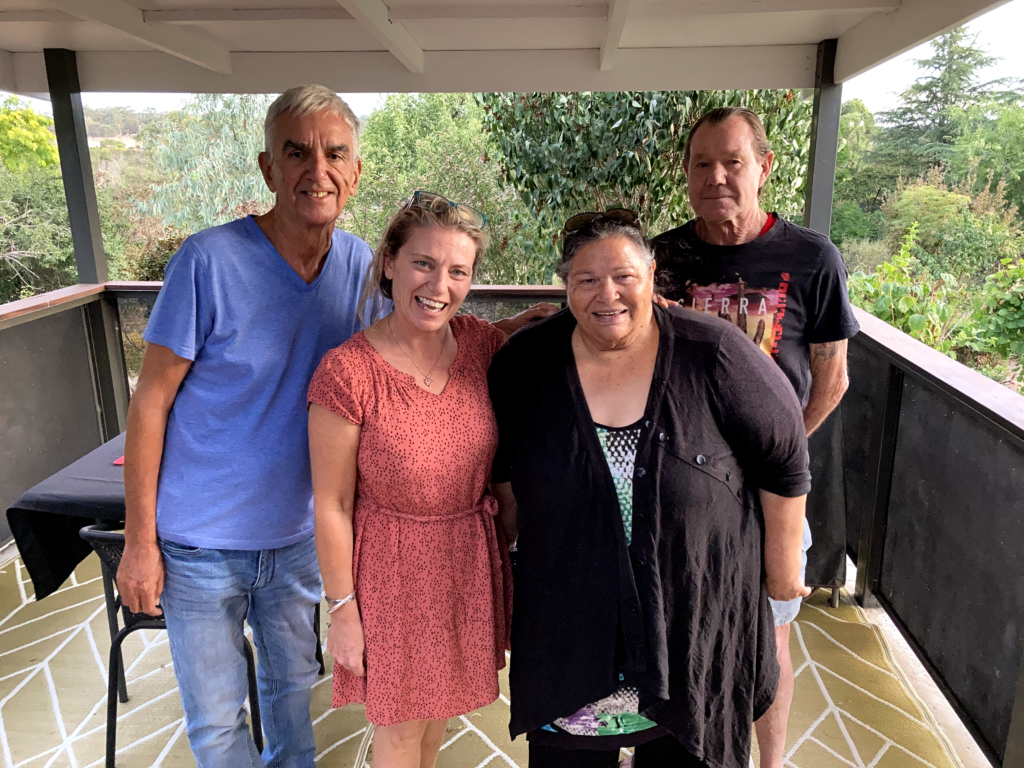
Lisa started to engage the Kojonup community as soon as she returned from Perth. Our discussions continued over the following months via phone and internet. John and I visited Kojonup in mid-February to meet key community members who Lisa had engaged in her project, including Kaneang Aboriginal Elders. John and I also spent a good part of a day with The Kodja Place committee members who look after the interests of this community centre. Lisa and colleagues have identified Kodja as a hub of ‘cultural unity that can be a safe place for inclusivity, place and belonging.’
I gave a talk focused on enabling connection, resilience, and healing to local Shire members and this was followed by a general discussion. I also spoke about the ABCD approach and how it could be implemented in Kojonup.
I later met with school principals and teachers to learn what had been happening recently in local schools, including how local history and its multicultural significance was being incorporated into the school curriculum. The importance of non-Aboriginal children learning more about Aboriginal culture was recognised.
We discussed how an ABCD approach could benefit the children and their learning activities, and considered helpful creative solutions in and out of school that could promote the social and emotional wellbeing of the youngsters. We emphasised the importance of schoolchildren enjoying close links to the wider community, and agreed that having them engage in art, craft, music, drama and dance activities at The Kodja Place would be of great benefit.
I sensed a real passion and drive amongst the community members I met during the time I was in Kojonup and involved in informal and formal discussions. On my last full day, Lisa and I were involved in six hours of meetings, including a very productive meeting with two young, inspirational teachers.
One of the highlights of John and my stay was hearing Lisa tell us the story of her first art class at one of the local schools and the impact it had on the children. She then pulled out her iPad and showed us the children’s art. The story was amazing, some of the artwork stunning. All created in less than 50 minutes, including the initial period of time when she took the children outside to help them regulate.
A more detailed description of these events can be found in my blog An Inspiring Visit to Kojonup.