

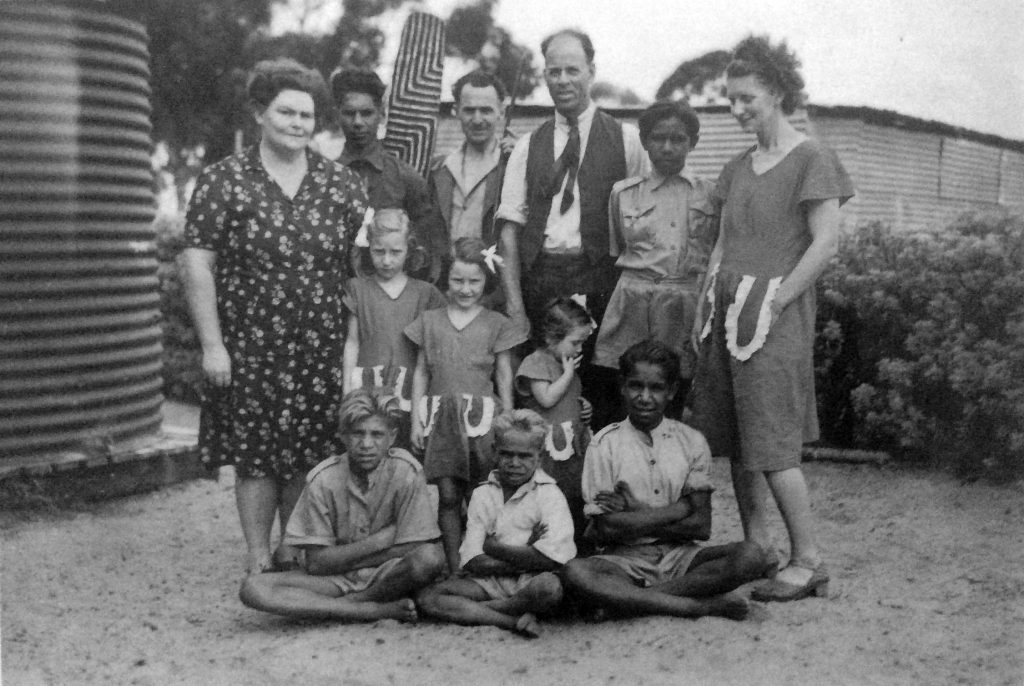
This month marks precisely 80 years since Noel White and his family arrived at Carrolup, after a long trek south from his sole-charge school near Geraldton. During his four and a half short years at the Government Settlement (until it was suddenly closed at the end of 1950, later becoming the Marribank Baptist Mission), he seized on the opportunity to enhance the educational outcomes for the children through the arts; artwork, dance, music, and drama. Football was in the picture, too.
All the boys and girls at Carrolup (excluding his own three children, who I was to come to know well) were part of what Australia now recognises as ‘the Stolen Generations’, were forceably taken from their own families ‘for their own good’—as Anna Haebich’s masterpiece was titled, quoting the words of the then ‘Chief Protector of Aborigines’, Mr A.O. Neville.
Noel was an experienced teacher, always working at sole-charge schools, ‘bush schools’ as they were known. He, as an Anglo-Indian, was also somewhat marginalised. But he brought something special to Carrolup: his integrity, and his ability to listen to others. In earlier blogs, we have detailed elements of the story, and I do not intend to repeat these here. What he brought to Carrolup was a sense of compassion, and an ability to enhance in the children a sense of agency and action, a moving forward to what could be a better future. His wife Lily was a key element in his success, not only as a sounding-board, but also a kindergarten teacher for the little kids.
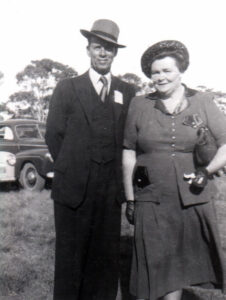 Noel realised that, in order to enhance the educational experience of his pupils, he had to listen to the children and deliver on their strengths, rather than focussing on their weaknesses. With the support of Sam Crabbe, the regional Schools Inspector, Noel created a program to achieve these goals, initiating engagement and developing resilience through the application of gentle encouragment and routinised activities. His ‘rambles’ through the bush surrounding the Settlement yielded the raw materials for inspiration, the children provided the rest!
Although many had been traumatised deeply by being stolen from their families, they held on tenaciously to their own values, and to the cultural knowledges of country, place, language and kin that they had already been immersed in from birth. These were acts of resistence: the Settlement that was, in every real sense, a Concentration Camp. Noel encouraged the children to interact with the Aboriginal pensioners reliant on rations distributed from the Settlement who were camped on the other side of the river, telling the children that they should be proud of their culture and its history.
Despite this harsh setting, the children’s sense of their inner selves remained, even though external forces (representing the State Government) were doing everything in their power to vanquish these memories. Such spirit, in what had been up to that point, a most tragic experience.
Mr and Mrs Whites (as the children called them) inspired the children and in turn, the pupils inspired their teachers.
Life at Carrolup changed for the better with the Whites’ arrival. While it was still a ‘Native Settlement’, and Noel did his best to try to protect the children from the excesses of the local staff of the then Aborigine’s Department, but he had no say in their shocking living conditions . Employed by the Department of Education, he lacked any authority on the Settlement—except in relation to the School.
So he and Lily focussed their efforts there.
When I started my Carrolup journey in 1985, at the request of the Marribank community, Parnell (Parnie) Dempster was one of two boys surviving of the original key Carrolup artists; Milton ‘Micky’ Jackson was the other. Both taught me a lot about those early days, and elements of their stories appear in some of my blogs here. The surviving letters the children sent to Florence Rutter in England during 1950 provide a vital perspective on the nature of the children’s close relationship with Florence, who became their chief advocate and greatest promoter. Her Diary, along with Mr White’s Carrolup School Diary, provide telling insights and immediate contemporaneous accounts.
The contribution of the White’s and Mrs Rutter, and especially the children’s prodigious output over just five years, is an enduring testament to the respect and love they shared for each other all those decades ago. All were gutted by the sudden and unforeseen closure of Carrolup Native Settlement. The rug had well been pulled out from under their feet, so to speak!
Together, these records, carefully treasured over the decades, have kept the Carrolup Story (as we have termed it) alive and kicking. The Story continues….